
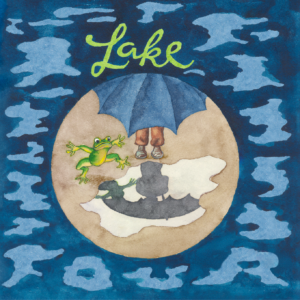
New Album “Four”
Release Date: June 5th, 2026 / LP – CD – Deluxe 2CD Set
Music
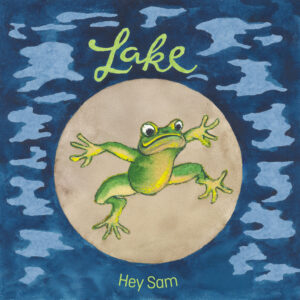
new single “Hey Sam”
albums
click here for more videos!
Newsletter
Biography
LAKE belong to the handful of German rock bands whose history doesn’t end at national borders. Started in the early 1970s between Husum and Hamburg, the band developed their own sound very early in their incarnation, one that felt untypical in West Germany: Westcoast-Rock, characterized by sophisticated arrangements, multi-voiced vocal harmonies and a musical elegance which resembled American role models rather than Kraut Rock or other German styles. “Record labels told is: Should we want something like that, we’ll go to the Americans directly“, keyboard player and producer Detlef Petersen remembers.
Nevertheless, LAKE continued their work process and developed their style further. The plan worked – albeit not immediately. LAKE played clubs, they toured, endured studio marathons and generally used any opportunity to sharpen their sound. Their intensive live work and the immense requirements with regards to skills formed their characteristic group sound, especially the complex choir movements which soon became their trademark.
In the mid-1970s, they succeeded in breaking through. Their debut album sold 400.000 copies. It climbed the Billboard chartsand made it possible for the group to play on a US tour in 1977 for several months. LAKE played support shows for international stars, suddenly finding themselves on stages which were routinely reserved for American top acts. They stood their ground with a sound which was not perceived as a mere European copy, but the real thing.
That same year, Lake received the Deutscher Schallplattenpreis (the German Recording Award) – a kind of knighthood for a German group with an international agenda. The US tour didn’t just bring success for the band, but also impressive experiences. There was one extraordinary event which has haunted their collective memory until today: During their American tour, LAKE only just escaped the tragic plane crash which killed members of the band Lynyrd Skynyrd. A radio session that was organized in Atlanta at short notice lead to the two groups following separate paths – a decision which turned out to be life-saving in retrospect. The tour was continued, but this experience left traces with regard to the fragility of life.
During the mid-1970s, the group which still counts as the classic LAKE line-up took shape:
Detlef Petersen – keyboards, compositions, production, backing vocals
Martin Tiefensee – bass, backing vocals
Geoffrey Peacey – keyboards, backing vocals
Alex Conti – lead guitar, backing vocals
Dieter Ahrendt – drums, percussion
James Hopkins-Harrison – lead vocals († 1991)
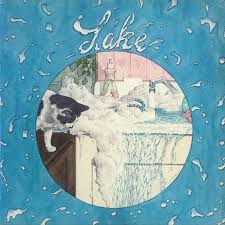
In this set-up, three albums which count as the essential LAKE creations: LAKE (1976), LAKE II (1978) und PARADISE ISLAND (1979).
During this era, the band moved in the international rock scene with legitimate ease. The second album, LAKE II, was recorded at Rockfield-Studios in Wales and on the legendary Caribou Ranch in Colorado, with vocal contributions by Carl Wilson of the Beach Boys. Big festivals followed and saw them sharing the stages with Santana, Chicago, Genesis or Queen. For a while, the press defined LAKE as the German equivalent of Supertramp – a comparison which dealt with their musical independence, rather than the aspect of being stylistic copyists.
Their success came at a price, though. Non-stop touring, the pressures of permanent productivity and controversial artistic views harmed the band. At the end of the 1970s, a split occurred in the classic line-up. During the following years, the members went their separate ways. Detlef Petersen worked as a film and TV composer, Martin Tiefensee became a camera man and cutter, Geoffrey Peacey found his calling as a sound engineer and producer.
Singer James Hopkins-Harrison, whose voice had crucially characterized the classic LAKE sound, died in 1991. After his passing, the story of LAKE seemed to have come to an end.
Towards the outside – but not internally.
From 2018, Petersen shook some action and began to cooperate again with Tiefensee, Peacey und Conti. For Petersen, it became obvious that the musical saga of LAKE had not been finished after all. Right at the beginning of the renewed activities, it seemed clear that this was not about a nostalgic re-invention, but a continuation of their legacy from today’s perspective. Tiefensee coins the perfect phrase: “We realized: Should it happen at all, it had to happen in this constellation.“
Due to Covid, working on new material stretched over several years. For a long time, they had been looking for a new lead singer, who was about to get complemented in harmony work and some of the solo performances by his important companion, Ian Cussick. For quite a while, their search didn’t strike any golden vocal pipes. Petersen describes the process without illusions: „I must have listened to nearly 300 singers. In spite of their undeniable qualities, nobody seemed to fit our songs. It was a stroke of luck to find Rob Reynolds in the English town of Harrogate at long last. Plus, he seems to like Germany and suits us vocally and in terms of mentality.“
This made the current LAKE line-up complete. Apart from that, Petersen remains responsible for theír compositions and the production of the album.
Rob Reynolds – lead and background vocals
Ian Cussick – lead and background vocals
Alex Conti – öead guitar, guitars and background vocals
Martin Tiefensee – bass, background vocals
Geoffrey Peacey – organ, clavinet, keyboards and background vocals
Detlef Petersen – piano, Wurlitzer, accordion, keyboards and background vocals
For the new album “Four“, the band organized high-profile rhythmic assistance: Kenny Aronoff, one of the most renowned drummers in rock history, recorded the drum tracks in Los Angeles. “Kenny had prepared his contributions superbly“, Tiefensee remembers. “He made his own suggestions – and simultaneously, he responded well to our ideas.“ Aronoff suggested to play the songs‘ verses “behind the beat“ and the choruses “before the beat“ – an aspect that lends the recordings their acutely felt excitement. On three songs, Kenny’s work gets complemented by LAKE’s new tour drummer Jan Schnoor.
“Four“ was recorded at Westwind Studio Husum, then mixed and mastered by Josh Tyrell London.
Musically, the new album makes a point of appearing versatile: Groove-orientated up-tempo numbers meet ballads, complex harmonies appear next to in-your-face rock energy. The album should not be perceived as a retrospective, but as a contemporary statement by a band that knows their own history, without ever getting limted by it.
In 2026 – 50 years after their debut – LAKE return with their new album “Four“. Concerts are also on the agenda. As with the record, the focus is not on nostalgia, but on up-to-date musical presence. Or rather, as Tiefensee puts it: „We’re not on stage to relate the old tales. We’re playing music that counts right now!“
Petersen puts it like this „If LAKE work today, they don’t present a nostalgic project, but an active band full of life!“.
Uli Twelker, February 2026

